
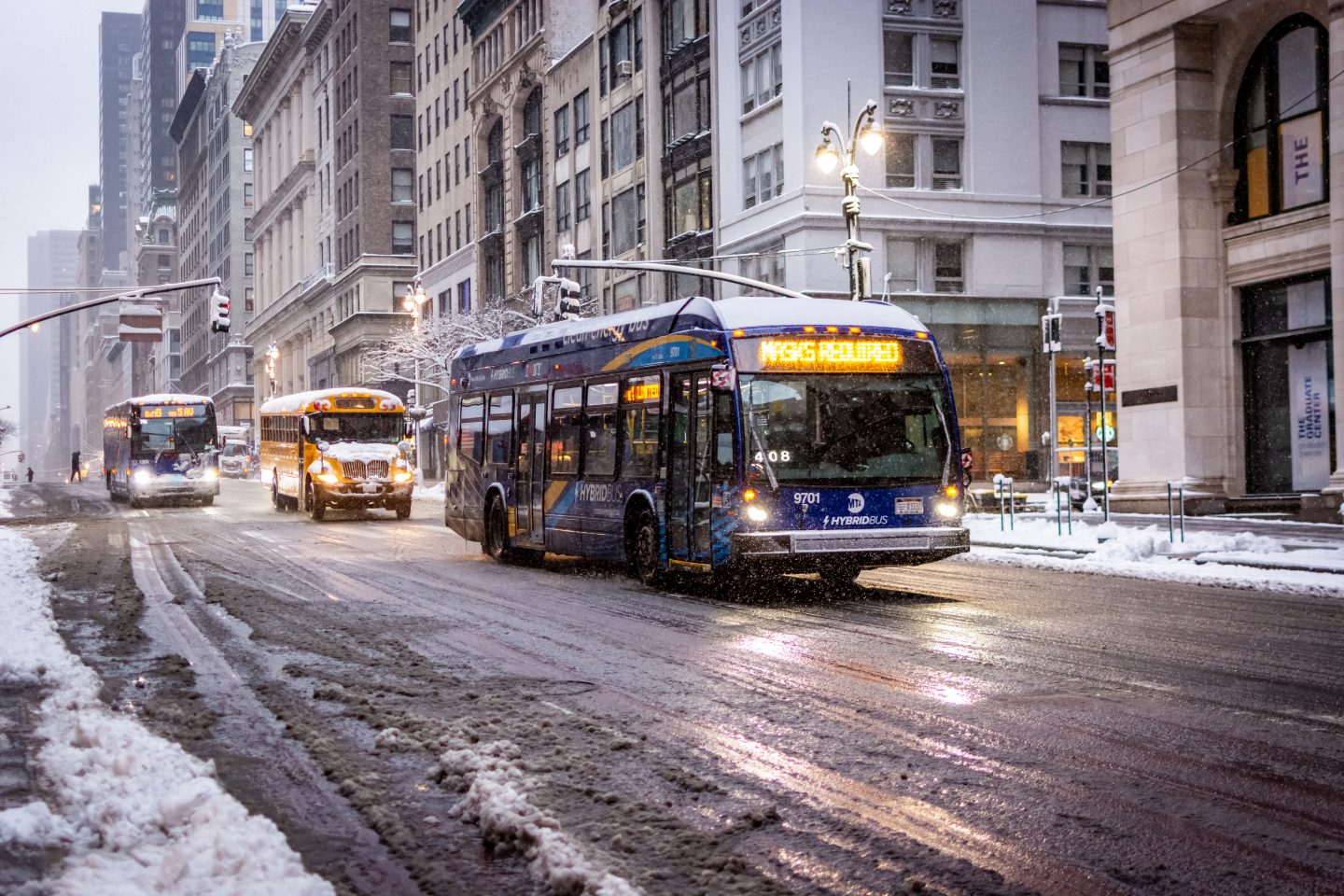
“Will vinyl film hold up in the elements?”
When our relationship coordinators have conversations with budding customers, there is inevitably a moment where we talk about the comparison between paint and vinyl. In that discussion, a question frequently asked when comparing paint to vinyl is, “Will vinyl film hold up in the elements?” This is an essential and understandable question, since transit agencies are accustomed to paint and know more about what paint can and can’t do. I don’t blame them. Stick with the devil, you know, right? But our customer development team appreciates the curiosity behind this question. It often helps a decision-maker, usually a maintenance director, get a clearer picture of what vinyl can do as the logical next step for a transit authority. This important question can help a transit authority make a well-informed decision about the future of its bus fleet.
Since we’re working with customers across the country, various climates and environments need to be considered so they can trust that vinyl will do the job. For example, in the Northeast, places like Buffalo, Boston, or Detroit face the extremes of winter cold, and the impacts of harsh road salt are a leading concern. In the South, cities like Houston, Atlanta, and New Orleans offer environments where customers worry about constant exposure to the persistent, warm, humid sun. In the west, Phoenix, Los Angeles, and Sacramento bring drier concerns, acting as a sun tax for buses out in record temperatures. Not to mention the wind, rain, snow, and other challenges across the United States.
Whether your weather is predictable or unruly, we know longevity is an important consideration.
Wouldn’t it be easier if we could apply sunscreen to a bus or put on some sort of giant snow pants to protect the livery? That would be quite the sight. But no, we take a professional and practical, quality- and care-focused approach to ensuring graphics are applied to transit vehicles from manufacturers like Gillig and New Flyer. Of course, vinyl needs to be applied to the correct dimensions for each of these vehicle types. Still, vinyl manufacturers also have material specifications that serve as recommendations for cleaning dust, dirt, oil, salt, tar, and sand without causing damage. Knowing these details and having a graphics provider who can point you in the right direction (hint, hint) is essential to longevity, regardless of seasonal and climate conditions.
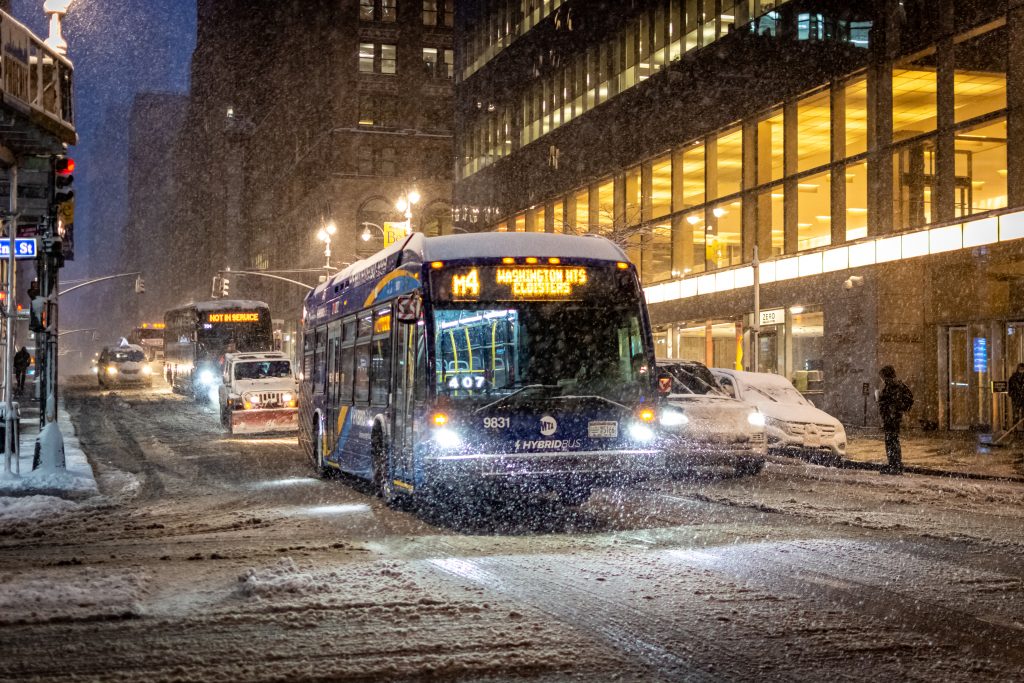
In 95% of the continental United States, a graphic on a vertical surface (legal-speak for “the side of a bus“) is warranted to last 7 years when using the correct makeup of industry-standard materials and premium printer inks. That covers fading, cracking, or peeling of the final installed graphic. And, yes, that warranty includes labor! For graphic manufacturers to offer this special 7-year warranty, material manufacturers certify the printer’s standard process, inks, and materials with an annual audit. Without that certification, the finished graphic is not warranted by the material manufacturer at all and relies solely on the individual graphics manufacturer for a warranty. This qualifies the graphic manufacturer as someone who works closely with the vinyl manufacturer and knows the vehicle well, so there’s no guesswork when it comes to keeping your livery in place.
After the graphics are printed, it’s essential to protect the ink layer. We always recommend using an overlaminate. Liquid laminates and clear coats are okay, too, but they can make the installation and removal of graphics more challenging. An overlaminate protects the rich colors and unique designs from the harsh rays of the July sun in Florida and in Texas, as well as the corrosive, dirty sand and salt that melts the snow and ice in New York and Ohio.
We always recommend referring to the vinyl film manufacturer’s specification since each material may require a different cleaning process. If using industry-standard materials, you can wash and use cleaners like you would a high-quality painted vehicle. The cleaning agent being used should have a pH value between 3 and 11.
Our installers preparing the vehicle for installation.
Tar, oil, and diesel stains can be hard to remove using the above standard cleaning methods. For these types of stains, we recommend using STG Gone or another citrus-based cleaner, followed by an immediate wash. Don’t panic if the stain doesn’t disappear after the first scrub. Some stubborn stains may require a few rounds of STG Gone or an additional solvent cleaner to remove them entirely.
While special considerations must be made when choosing materials for specific applications, you can generally expect a well-maintained transit vehicle graphic or wrap to last 10 years in any condition. Getting the most out of your vinyl vehicle livery wrap is essential to the service we provide to our customers and the relationship we’re building for when these questions inevitably come up. Consultation from our customer development team about these elements and details is always free, so no need to hesitate or worry about hidden costs just for having a conversation!
So, what’s coming up for you? Have you ever experienced fading, cracking, or peeling of a bus wrap or graphic? Have you used paint over and over, wondering if there’s a better option? And have you found working with graphic providers challenging due to a lack of detail and support? Well, then, it may be time for a change. Seifert Transit Graphics is here to listen and provide the answers you need to keep those buses clean, beautiful, and bright all year long.